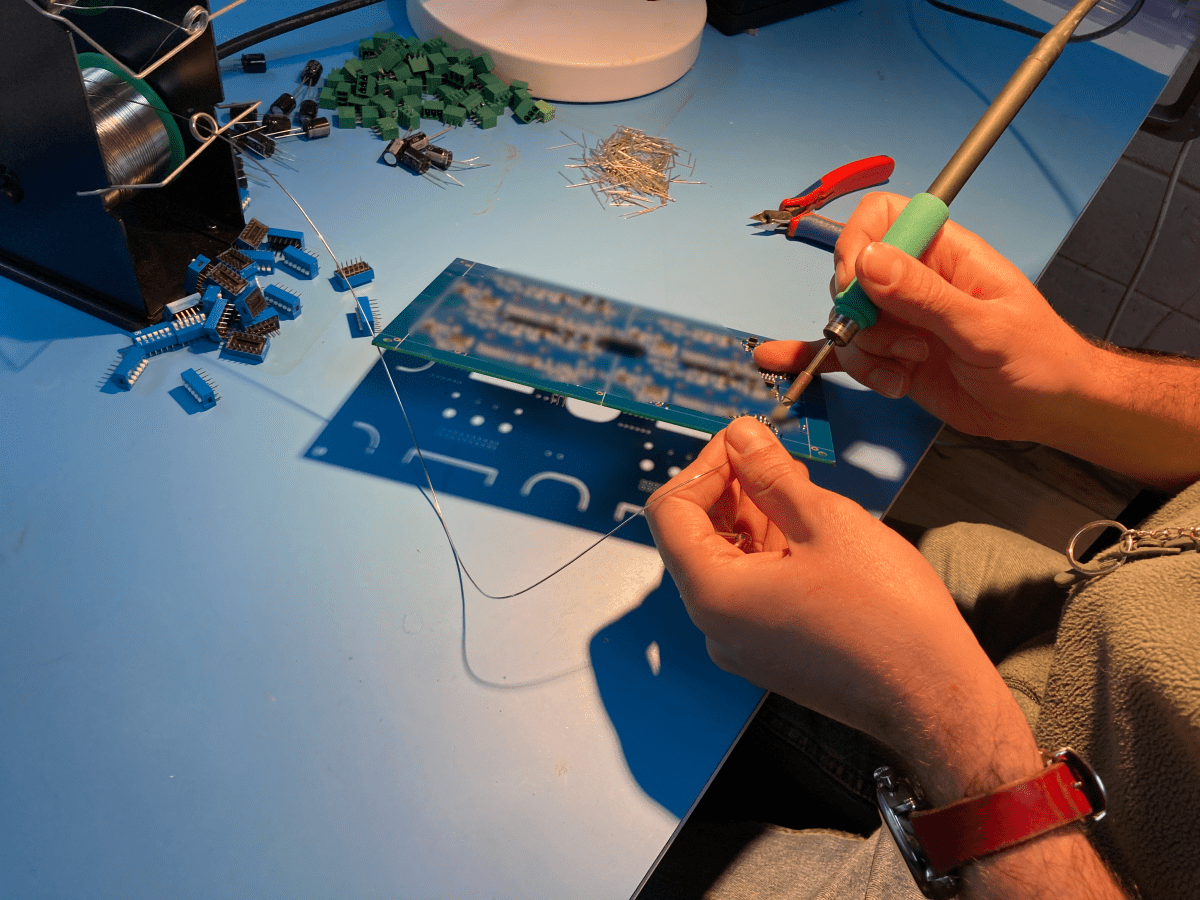
This year we’ve reached another milestone for Agile Electronics. Previously we’ve only had a maximum of two people working on electronics assembly at any one time, and that second person has been me (Sandra) since December 2020. This year, we’ve welcomed Hank to be a new casual employee, whose main role is to take on the manual through-hole soldering of boards for our customers. So this week, we’ve had Hank busy soldering and testing boards for one customer, while I was looking after the machines doing surface mount assembly for another customer, and while John inspected boards, supervised everything and helped out where needed.
With our new employee, we will be able to take on more manual soldering, so if this is something your product needs, contact us for a quote.
We’ve been pleased to see PCB surface mount assembly customers moving away from supplying cut tape, partly in thanks to our popular article on why cut tape is a bad idea. However, we’ve noticed a trend in recent months, where partial reels suffer a similar problem to cut tape.
A few recent supplies of reeled parts have come on multiple reels, with some reels containing only a single component! There is no point in trying to load a reel with fewer than five components on it onto a pick and place machine (unless the component is large and expensive). Each time a reel is loaded into a feeder and put into position, there is a chance of losing a component or two, despite the care taken by the operator. This is why some assemblers insist on receiving many more parts than required for the boards. (I’ve seen 100 quoted on one assembler’s website.)
While having multiple partial reels is less annoying and costly for assembly than multiple pieces of cut tape, and will lose fewer parts, it will still lead to more parts potentially being lost or unable to be used. It will also mean multiple feeder loadings per component, which will add a few minutes per reel change to the job.
I don’t know what it costs the component wholesaler to put a single component on a reel, given that customers pay a standard fee for reeling, regardless of how many reels are delivered, but I expect that the economics aren’t really there for cheap components. While I sympathise with the goal of avoiding the waste of components, there is waste in the form of extra reels and leader tape, plus time either of workers and/or machines to create the extra reels, not to mention the additional cost downstream during assembly for customers, with components not being used. I hope this trend goes away soon. Meanwhile, I can only advise customers to choose between having fewer boards fully assembled, buying more parts, or using a supplier who doesn’t split ordered components across multiple partial reels.
I’m pleased to announce that Agile Electronics is now in a position to employ its first non-founding staff member to assist with manufacturing. Currently this is on a casual basis, but we hope that the job will grow with the business. We welcome Gen!
There is one thing worse than cut tape, and that is loose components! You might think it is a saving to just buy a bag of the components you need, but if you are using a professional assembler, it is often cheaper to buy in bulk on a reel, or to make use of the very reasonable reeling service from suppliers like Digikey or Mouser, where your small number of components are mounted on a reel, ready for assembly.
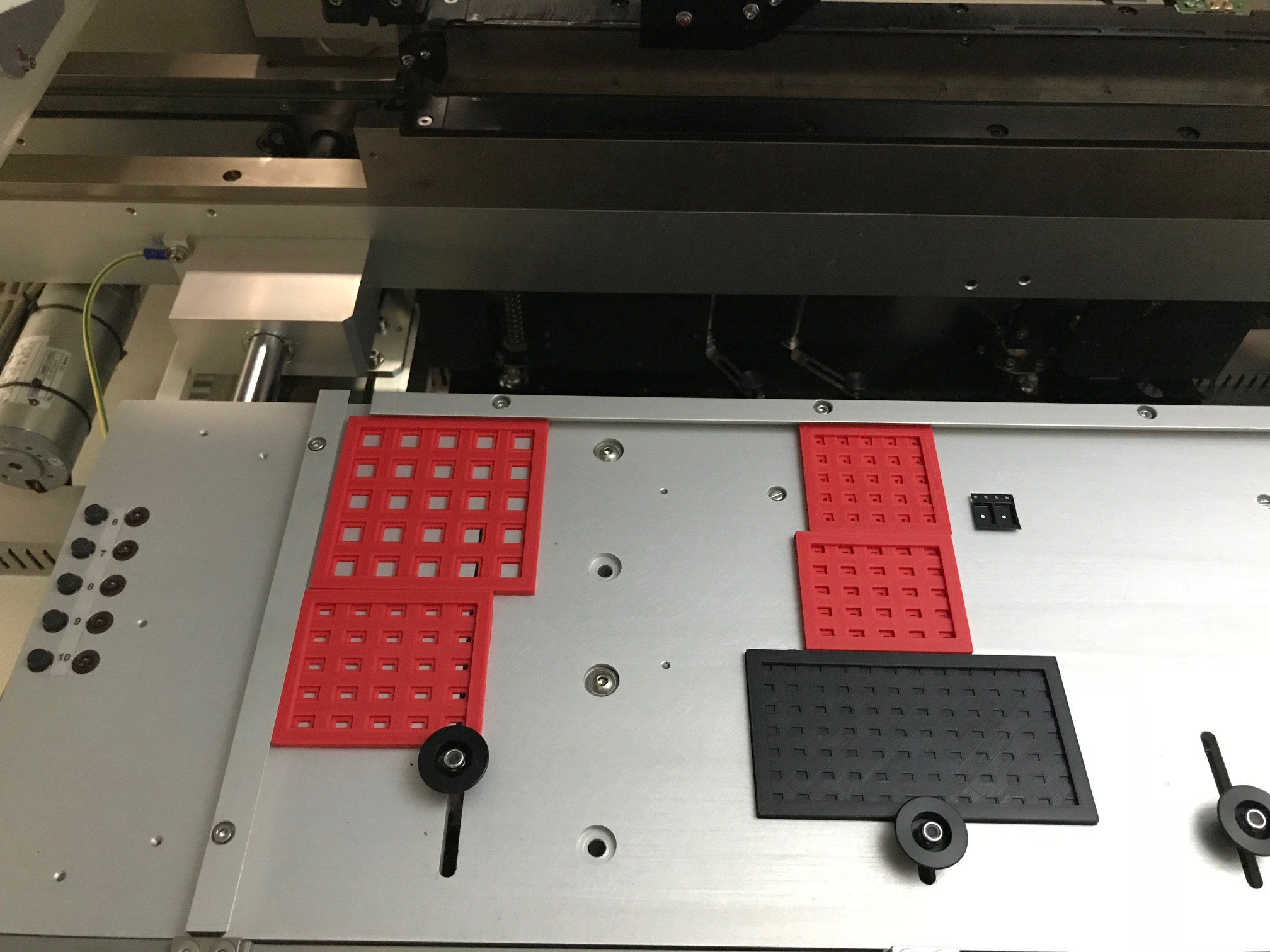
So, what do we do when we receive loose components? Some are taken out of their plastic bags and put into a belt or tube feeder. For others, we need to design and print a special matrix tray, and then manually place the components into the matrix tray. For really short cut tape, we stick the tape into the matrix tray area with removable double-sided tape. For each tray or short cut tape, the pick and place machine needs to be programmed to indicate the dimensions of the tray and the type of component contained in it. As you can imagine all this preprocessing takes quite a bit of time. So, do think twice about how you provide components to your friendly assembler!
Custom matrix trays set up in the Europlacer pick and place machine. Also a short piece of cut tape with only two components, stuck into the matrix tray area.
Cut tape wastes an assembler’s time and may cost you more money than you save on parts
When getting your short run of PCB assembly for your design you may be tempted to just buy cut tape for your parts, since full reels have thousands of components on them and may cost more. However, consider what happens when you provide cut tape to your assembler.
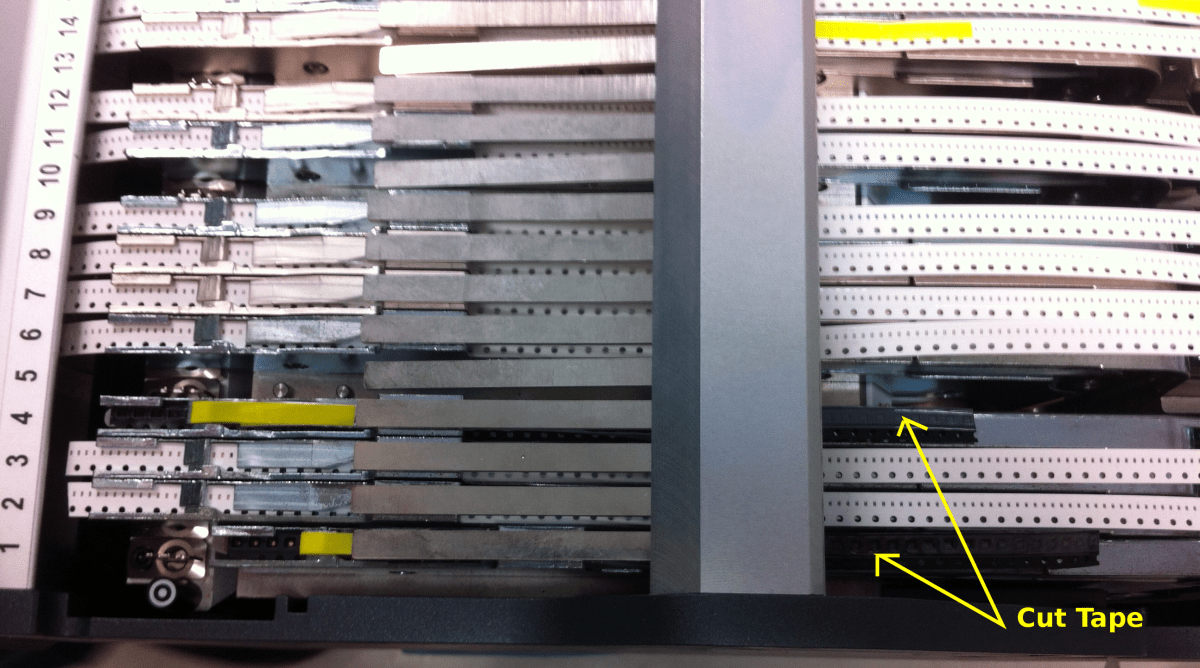
Cut tape mounted in feeder elements 1 and 4. All other feeders contain reels of components.
For each cut tape, the assembler needs to mount it on a feeder, so parts can be automatically fed into the machine for placement.
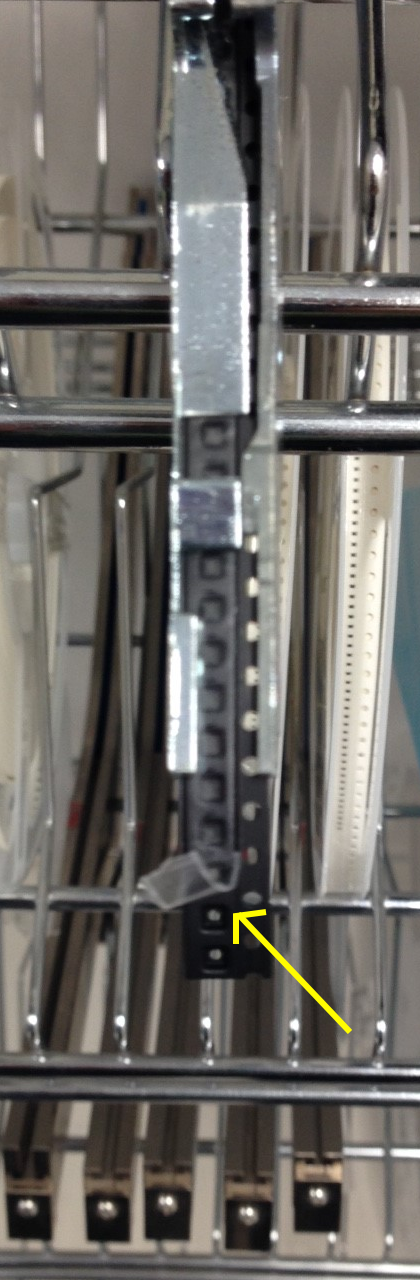
The end of the cut tape has been peeled back to allow a leader tape to be attached using some joiner tape. Components need to be removed from the exposed pockets.
Each feeder needs a couple of feet of blank leader tape, attached with special tape to your piece of cut tape. The first 3 or 4 components worth of cut tape will need to be peeled back to attach the leader tape. Those 3-4 components need to be repocketed at a later time in the cut tape, which leads to extra manual handling and can be a source of error and lost parts.
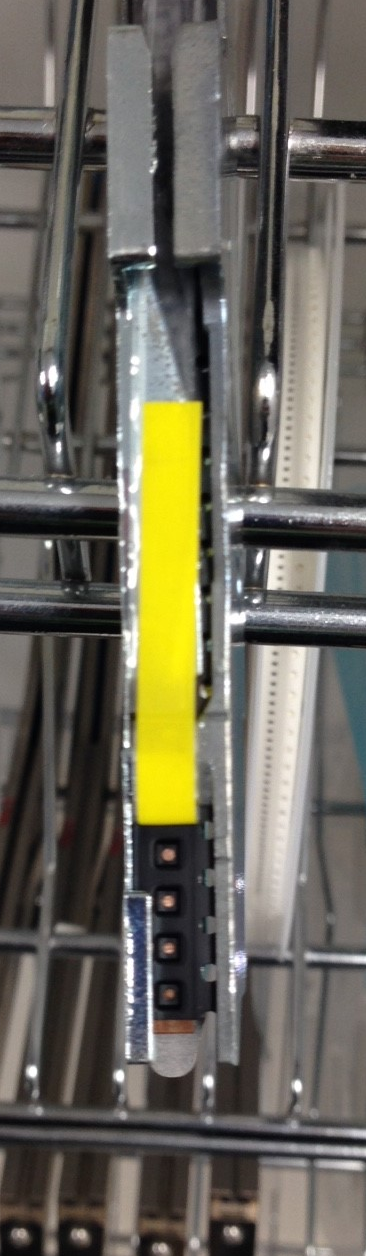
Attaching joiner tape
If you also supply only the exact number of parts required for your boards, the assembler may need to spend extra time dealing with misfeeds, or possibly not do a complete run for you due to dropped components. If you do choose to use cut tape, supply at least 5 additional components, to allow efficient handling.
Let’s look at some costs associated with an example run. Suppose you have 20 pieces of cut tape for your job. For each tape, there is ~$1 of joiner tape needed, plus about 10 minutes of extra time per type of component. At average engineer rates of ~$50 per hour this adds about $200 to your job. If you are only doing 20 boards, that’s $10 per board. Figures will differ for different manufacturers, and some machines may be better or worse at handling cut tape, but as a rough estimate, assume that your job costs $10 more per cut tape and that you will fail to get a complete run unless you supply extra components.
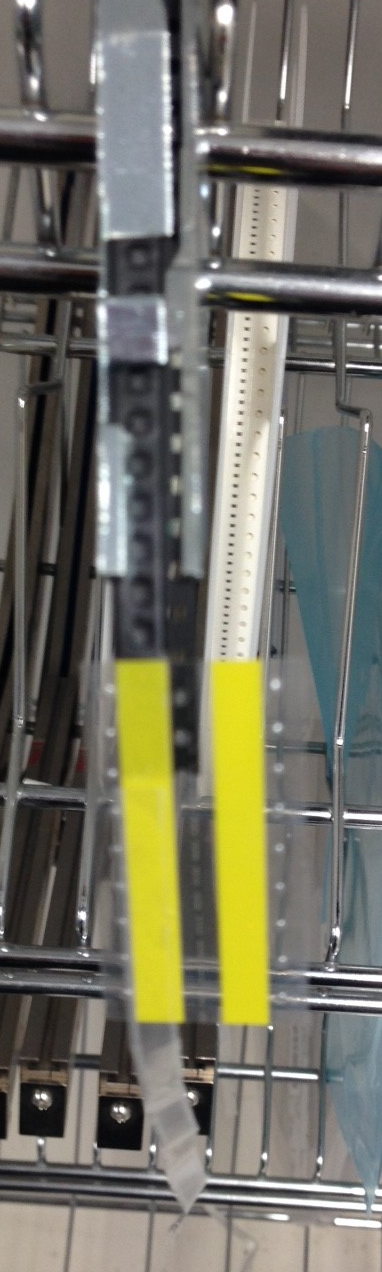
Leader tape secured with joiner tape
A further thing to be aware of is that there is no guarantee that you will get a single piece of cut tape for each part when you buy your components as cut tape. You may end up with several pieces, and each of these needs to be mounted separately. The extra pieces of cut tape will either stop production as they need to be mounted when the previous pieces have been consumed, or they will take up extra feeder slots. The number of components lost in production is proportional to the number of pieces of cut tape for the part. Since it is known that components provided as cut tape can be in multiple pieces of tape, assemblers will either have to assume the worst when they give you a quote, wait until they see the components before giving a quote, or just give an estimate before the job.
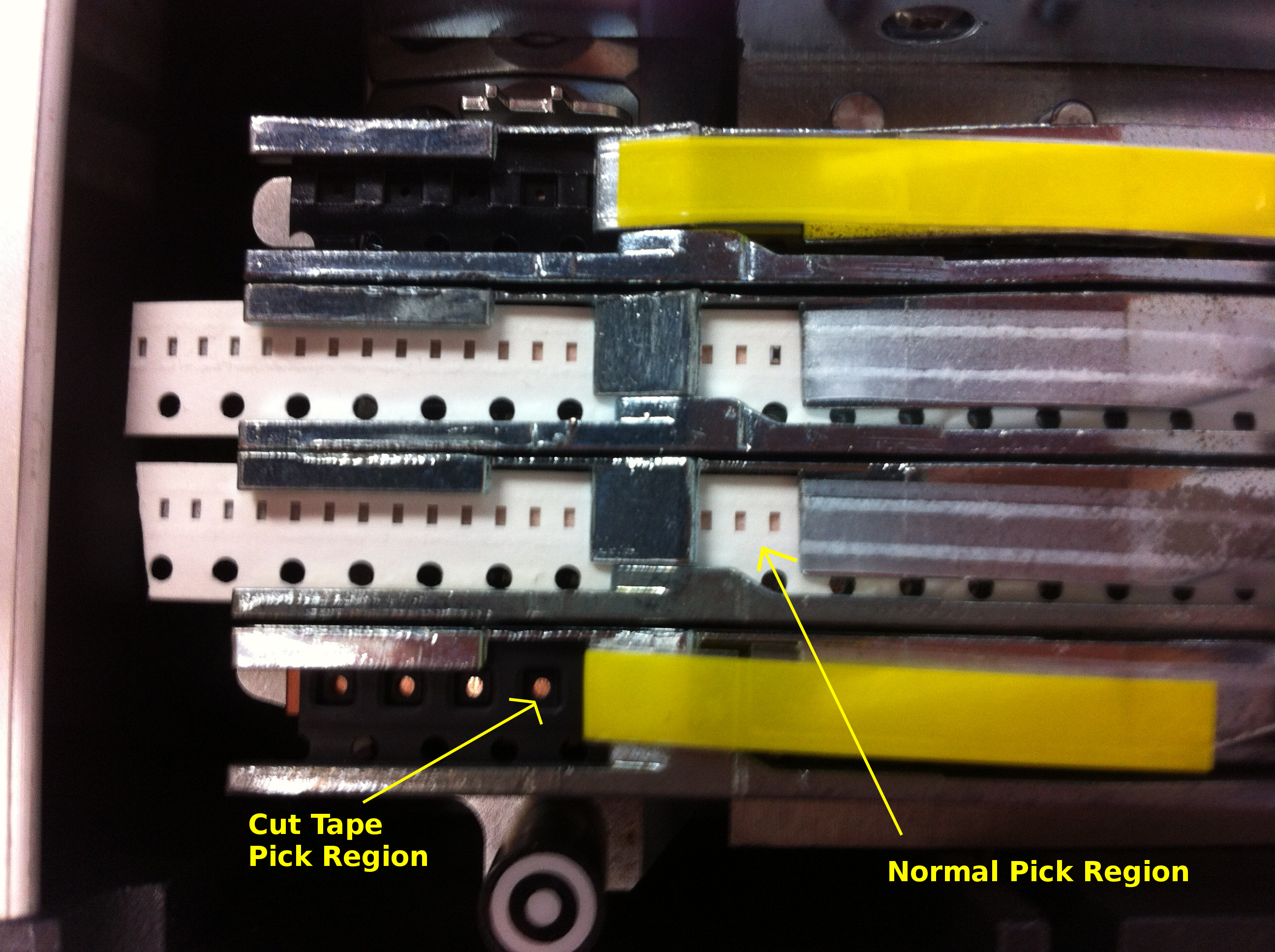
Pick regions for cut tape and normal tape. Note the length of the leader tape in each case.
There are various solutions to the curse of cut tape.
Buy a full reel
Buy your small number of components and get them put on a reel for manufacture by the supplier (eg. ~$7 reeling fee for a “digireel” from Digikey)
For standard components such as passives, you might be able to cheaply use the assembler’s reels. We like to encourage the use of our stock of standard passives, and may even provide these for free for your job, as it saves us time and hassle.
We sometimes get asked how to prepare a design for manufacture on a pick and place machine. There are things to be aware of that are not needed for your prototype, including fiducials, which are marks on the board that help the machine’s vision system place the components accurately. Also the way that components are provided makes a lot of difference to how long it takes to set up the run.
An excellent introduction to design for manufacture is provided by Dave Jones. We strongly recommend watching it before sending your design to be made. Having said that, we can handle 0402 sized components, but are happy to use other sizes if required.
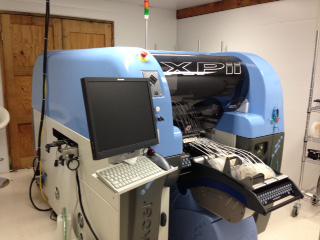
Hello world! Agile Electronics has been providing electronic assembly services since 2010. We’re located in the Melbourne metropolitan area. We have a Europlacer XPii-IIT pick and place machine; a Dek solder printer; and convection and vapour phase ovens. We can provide surface mount assembly services for any size job, including prototypes.



 Agile Electronics